
Glass louvres are back in fashion after decades in the wilderness. They read modern, they let a bathroom or laundry breathe without a whining exhaust fan, and they cost less than most people expect. The first design decision on any glass louvres Penrith install is fixed or adjustable. Both have their place. Here is how to pick.
Fixed glass louvres
The blades sit at a set angle, permanently. No mechanism, no moving parts, nothing to service. Water sheds off the top edge, air passes between the blades under natural convection. Excellent for wet areas, plant rooms, ventilation panels above doors, and any application where the airflow requirement is constant and the space is not occupied enough to want manual control.
Adjustable glass louvres
Blades pivot on a linked mechanism, controlled by a lever or a motor. Fully open they give near-maximum airflow. Fully closed they seal the opening against weather and reduce airflow to close to zero. Great for living areas, bedrooms, alfresco enclosures and any space where the user wants control over ventilation and privacy depending on the day.
Glass louvres Penrith cost comparison
- Fixed 4 blade glass louvre, standard frame, 600 x 900 mm: $380 to $650 supplied and installed
- Adjustable 4 blade louvre, same size, manual lever: $650 to $1,100 supplied and installed
- Motorised adjustable, same size: $1,200 to $2,400 supplied and installed
- Retrofit adjustable clip and mechanism to existing louvre frame: usually not viable, the frames are engineered differently
Where fixed glass louvres Penrith side make sense
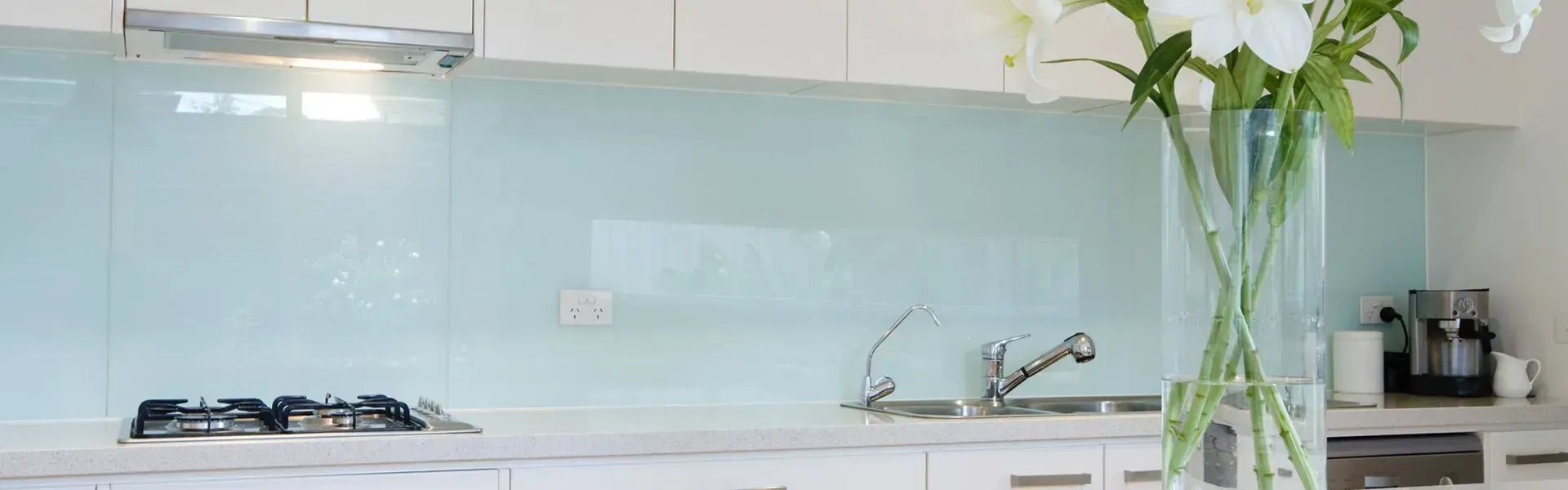
Laundry ventilation panels above the door. Bathroom high-lights where privacy matters more than adjustability. Roof space cross-ventilation. Kitchen splashback windows where the frame sits below eye level and you want passive airflow without a mechanism to break. Plant equipment enclosures where you never need to close the louvre. Anywhere the primary need is ventilation-plus-daylight without control.
Where adjustable wins
Master bedroom windows facing the street or the neighbour. Living room walls that need to breathe in summer and seal in winter. Enclosed patios where the family wants an open feel in fine weather and full closure when the wind is up. Any location where the user actually wants to open and close the louvre as the weather changes.
Glass spec for both types
Standard louvre blades are 4 or 5 mm toughened glass with polished long edges and arris-ground short edges. Blade sizes typically 100, 150 or 200 mm wide. For obscure privacy applications we use pattern glass (fluted, satin, obscure) or acid-etched clear. All safety-glazed under AS 1288 because the blades sit in a location a person could contact.
Mechanism reliability on adjustables
Cheap adjustable mechanisms bind up within two years. We spec Breezway or similar Australian-made linkages because they last 15 to 25 years with basic maintenance. Motorised units add reliability risk (motor, wiring, controller) but with quality gear the failure rate is low. Our window and louvre team services both mechanical and motorised louvres.
Where we fit glass louvres Penrith side most
Around Penrith, Emu Plains and Glenmore Park we fit more adjustable glass louvres Penrith side in living areas and more fixed louvres in bathrooms and utility spaces. The split is roughly 60 to 40 in favour of adjustable for new residential work, and closer to 30 to 70 in favour of fixed for commercial and industrial.
Planning a glass louvre install or replacing an old one? Ring 02 4722 2787. We come out with samples of both blade types and mechanisms so you can pick before we quote.
Frequently asked questions
Are glass louvres draughty in winter?
Adjustable louvres with good compression seals close tightly and are no draughtier than a standard casement window. Fixed louvres always allow some airflow by design, which is why they are not typically fitted in habitable rooms where thermal control matters.
Can broken louvre blades be replaced individually?
Yes. Each blade sits in a pair of clips that can be released without removing the frame. Replacement blades are made to the original size and glass spec. Turnaround is usually 3 to 7 working days for a single blade.
How often should adjustable louvre mechanisms be serviced?
Annual check-and-lubricate for high-use louvres, biennial for low-use. A quick clean of the pivot points with silicone dry lube adds years to the mechanism.


