
On almost every commercial fit-out we quote in Western Sydney the same question comes up: toughened or laminated? Both are Grade A safety glazing under AS/NZS 2208, both are code-compliant in most positions, but they behave very differently and cost differently. Here is the shorthand we use with builders.
How each is made
Toughened glass
Ordinary annealed float glass, heat-treated to around 620 degrees Celsius then rapidly cooled. The surface goes into compression and the core into tension. The finished pane is 4 to 5 times stronger than the same thickness of ordinary glass, and when it breaks, the whole pane shatters into small blunt fragments.
Laminated glass
Two panes of ordinary glass (or two panes of toughened) bonded to a PVB (polyvinyl butyral) interlayer under heat and pressure. When the glass breaks, the fragments stay stuck to the interlayer, so the pane holds its shape in the frame.
Where toughened wins
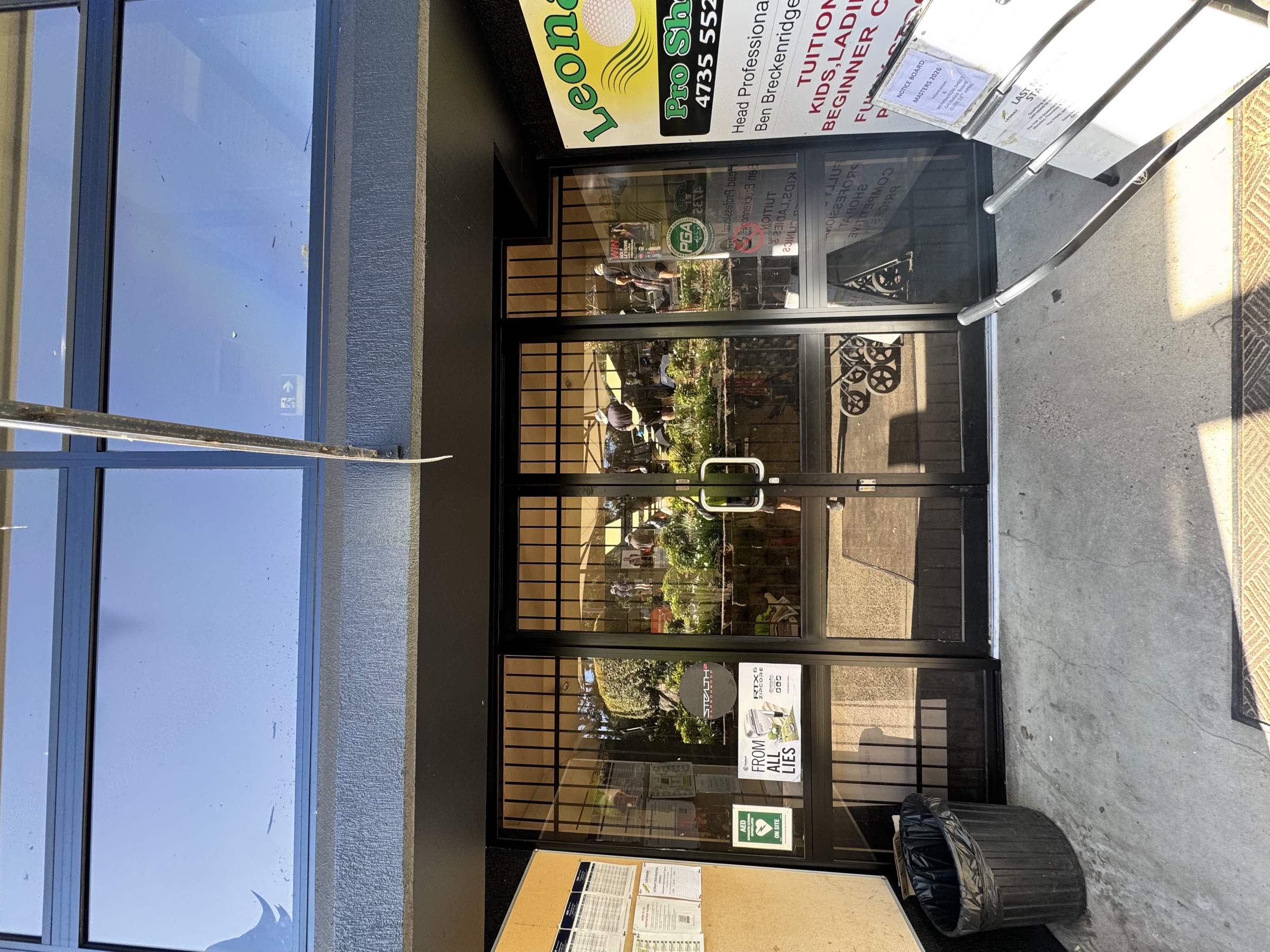
- Full-height doors and side lights. Toughened is the standard for door hardware because the glass is drilled and edge-worked before tempering.
- Low-sill windows. AS 1288 requires safety glazing anywhere the pane sits within 500 mm of the floor.
- Shopfront panes without security concerns. On a standard retail tenancy toughened is faster to fabricate and cheaper per m².
- Frameless shower screens and balustrades. The industry default.
Where laminated wins
- Overhead glazing. Skylights, atrium roofs, canopies. If overhead glass fails, laminated holds shape and does not fall.
- Security-sensitive tenancies. Jewellers, pharmacies, clinics, gun stores. Laminated survives impact long enough to make forced entry expensive.
- Acoustic-critical spaces. The PVB interlayer damps sound. See our commercial glazing service for options.
- UV-sensitive interiors. The PVB interlayer blocks around 99% of UV, which matters for retail displays and gallery spaces.
Cost comparison
Ballpark for standard sizes and thicknesses in the Penrith market, supplied and installed:
- Toughened 6 mm, roughly $250 to $400 per m² installed.
- Laminated 6.38 (3+0.38+3), roughly $300 to $500 per m² installed.
- Toughened-laminated 8.38, roughly $500 to $800 per m² installed.
Actual quotes depend on size, edge work, access, and lead time. These are Penrith and Western Sydney figures in 2026.
A quick decision tree
- Is the glass overhead or sloped? Laminated.
- Is the tenant handling cash, prescription meds, or high-value stock? Laminated, or toughened-laminated.
- Is this a shopfront on a busy corner with impact risk? Toughened-laminated.
- Is this a door, side light, or low-sill window in a general commercial space? Toughened.
- Is acoustic performance a lease requirement? Laminated.
Real jobs we have specified
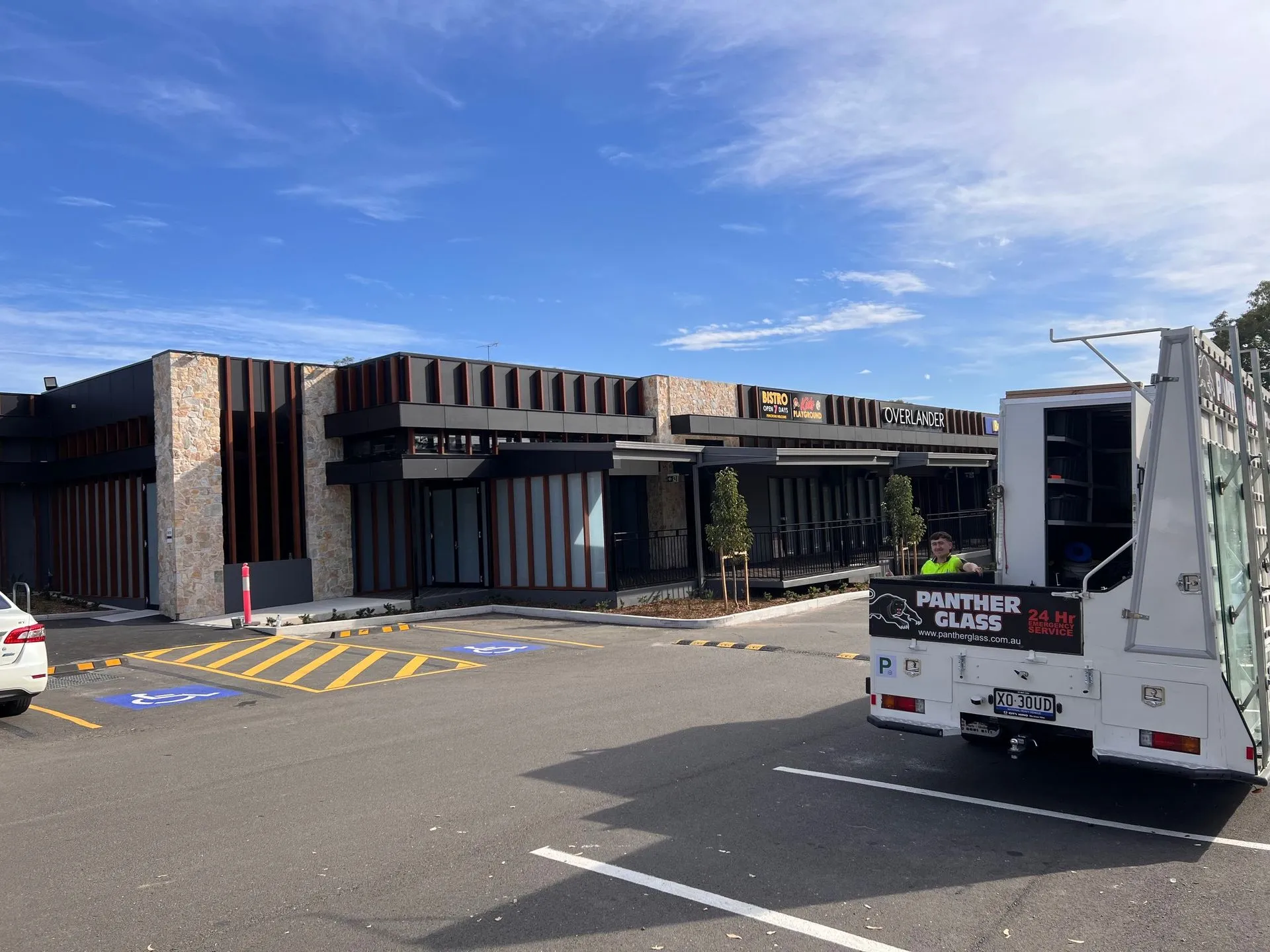
Marshalls Mercedes-Benz dealership uses toughened for the showroom shopfront (impact-managed) and laminated for the service reception (customer-safe under any impact scenario). Our Nepean Motor Group service reception is toughened throughout because the frame supports it and the trading pattern is low impact.
Get the right spec on your quote
Send us the drawing set or a site photo and we will call out toughened vs laminated on every panel, with the reason next to each.


